

Why Was Jannik Sinner Suspended – His suspension stunned the tennis world—not because of intentional doping, but because it exposed the grey areas of anti-doping enforcement. The world No. 1 tested positive twice for clostebol in March 2024, a banned substance later ruled to have entered his system unintentionally through contact with a team member.
Despite investigators accepting there was no intent to cheat, strict liability rules meant Sinner was still held responsible. After an initial no-fault ruling, WADA appealed, resulting in a negotiated three-month suspension that allowed him to return before the French Open.
The case divided opinion across the sport and reignited debate over fairness, transparency, and how anti-doping rules are applied at the highest level of tennis.
What happened (the short version)
Why Was Jannik Sinner Suspended? – Jannik Sinner was suspended because he twice tested positive for clostebol, a prohibited anabolic agent, in March 2024—triggering anti-doping rule violations under tennis’s anti-doping program.
Two positive tests: One in-competition sample at Indian Wells on 10 March 2024, and a second out-of-competition sample eight days later, both showing low levels of a clostebol metabolite.
- Two positive tests: One in-competition sample at Indian Wells on 10 March 2024, and a second out-of-competition sample eight days later, both showing low levels of a clostebol metabolite.
- Initial ruling: An independent tribunal later found “No Fault or Negligence”—meaning Sinner wasn’t deemed at fault—and imposed no ban at that stage.
- Appeal + settlement: WADA appealed that outcome to the Court of Arbitration for Sport (CAS), but then agreed a case resolution where Sinner accepted a three-month period of ineligibility.
The Substance: What Is Clostebol?
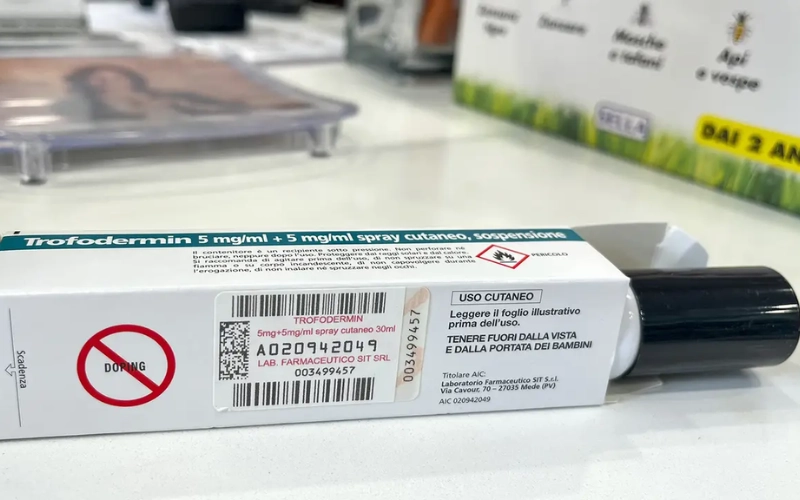
Why Was Jannik Sinner Suspended? – The case revolves around clostebol, a synthetic anabolic steroid listed on the World Anti-Doping Agency (WADA) prohibited substances list. While clostebol is banned in competition, it is not commonly associated with deliberate performance enhancement in elite tennis.
Clostebol is most frequently found in topical creams and sprays, often used to treat cuts, abrasions, or skin infections. In some European countries, these medications are available over the counter and are widely used in everyday medical treatment.
In March 2024, Sinner tested positive for trace amounts of clostebol during routine anti-doping tests [1]. The levels detected were extremely low—far below what would normally be associated with intentional doping or performance enhancement.
How Did It Enter Sinner’s System?
According to investigations accepted by tennis authorities, the clostebol entered Sinner’s body unintentionally through contact with a member of his support team.
The explanation presented was that a team member had used a topical medical product containing clostebol and later came into physical contact with Sinner during routine treatment or massage. This kind of accidental contamination has been documented in other anti-doping cases, particularly involving topical substances.
Crucially, independent investigators and tennis authorities accepted that Sinner did not knowingly ingest or apply the substance himself, and that there was no evidence of intent to cheat.
Strict Liability: Why Intent Doesn’t Matter

Why Was Jannik Sinner Suspended? – Despite accepting that the contamination was accidental, Sinner was still subject to suspension because of a core principle in anti-doping law known as strict liability.
Under WADA regulations, athletes are fully responsible for any prohibited substance found in their bodies [2], regardless of how it got there or whether there was intent. The rule exists to prevent loopholes and excuses that could be exploited by athletes attempting to evade responsibility.
In simple terms:
- Intent is relevant for determining the length of punishment
- But not for determining guilt
This means that even if an athlete proves they did not cheat, they may still face sanctions if a banned substance is detected.
The Initial Ruling: No Fault or Negligence
Why Was Jannik Sinner Suspended? – The World Anti-Doping Agency (WADA) chose to appeal the initial ruling, arguing that while the contamination may have been accidental, there was still a degree of responsibility related to the management of Sinner’s support team.
WADA’s appeal did not accuse Sinner of intentional doping. Instead, it focused on whether sufficient safeguards were in place to prevent contamination—an increasingly important issue in professional sport.
This move shifted the case from a question of innocence to a debate over procedural responsibility.
Why Was Jannik Sinner Suspended? – The Three-Month Suspension Explained
Rather than prolonging the legal battle, Sinner and his legal team entered negotiations that resulted in a three-month suspension. This penalty was widely viewed as a compromise outcome.
Key aspects of the suspension:
- It acknowledged a technical violation of anti-doping rules
- It reflected the lack of intent and minimal substance levels
- It avoided a longer ban that could have disrupted Sinner’s season entirely
- It allowed him to return in time for the French Open
In anti-doping terms, a three-month suspension is considered relatively light, reinforcing the conclusion that Sinner was not viewed as a deliberate offender.
Why Was Jannik Sinner Suspended?Reaction From the Tennis World
The response from players and commentators was mixed—and, in some cases, highly critical.
Novak Djokovic and others raised concerns about consistency and fairness, questioning whether high-profile players receive more lenient outcomes than lower-ranked athletes. Some argued that a lesser-known player might not have benefited from the same interpretation or negotiated settlement.
Others defended the process, pointing out that:
- The rules were followed as written
- The punishment reflected the circumstances
- The system worked as intended by balancing accountability with proportionality
The case reignited long-standing debates about transparency, trust, and equity in tennis anti-doping enforcement.
How Does This Compare to Other Doping Cases?
Why Was Jannik Sinner Suspended? – Sinner’s case stands apart from traditional doping scandals for several reasons:
- There was no evidence of performance enhancement
- The substance was detected in trace amounts
- The source was external and accidental
- The process involved multiple rulings and appeals
By contrast, cases involving substances like EPO, anabolic cycles, or blood doping typically involve long bans and clear intent. Sinner’s situation sits in a grey area that highlights the tension between scientific nuance and rigid legal frameworks.
Why the Case Matters Beyond Jannik Sinner
This case is about more than one player. It underscores the reality that:
- Athletes are vulnerable to accidental contamination
- Support team management is critical
- Anti-doping rules prioritize certainty over context
- Even “no fault” cases can lead to suspension
For tennis, the controversy has renewed calls for clearer guidelines around trace substances, contamination thresholds, and proportional punishment—especially as testing technology becomes more sensitive.
Final Verdict: Why Was Jannik Sinner Suspended?
Jannik Sinner was suspended after testing positive twice for clostebol, a banned substance, in March 2024. Although investigators accepted the drug entered his system accidentally via a support team member and that there was no intent to cheat, anti-doping rules operate under strict liability, meaning players are responsible for any prohibited substance found in their body.
As a result, Sinner received a three-month suspension following a WADA appeal, sparking widespread debate about fairness and consistency in tennis anti-doping enforcement.
If you enjoyed this article, you might enjoy my article on Jannik Sinner’s coach.
