
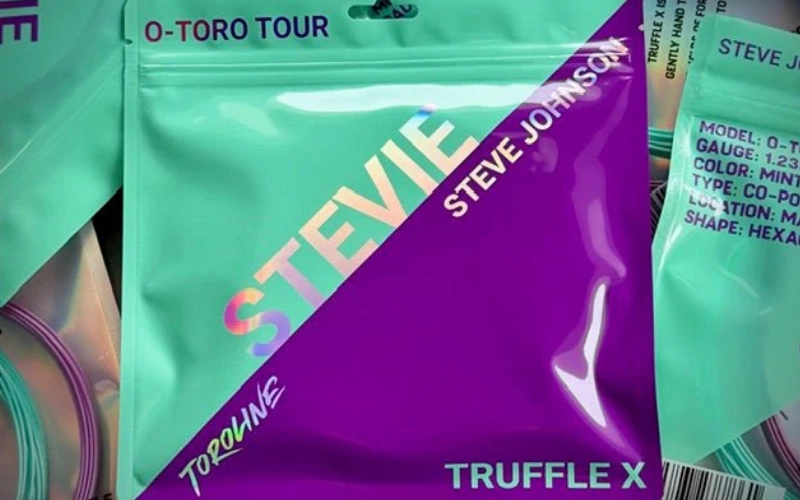
Toroline Stevie Hybrid is a two-string setup using Toroline O’Toro Tour (mains) and Toroline Truffle X (crosses). I tested it in the Head Speed MP. First hour? Honestly… bland. Very muted, low feedback, and I struggled to “feel” where the ball was going. But after it settled, it started to behave more like a familiar poly setup: comfortable depth, good access to spin, solid stability on backhands/volleys, and a nice pop on serve.
The big question I kept asking was: what does this give me over a softer rounded poly cross, or even a poly/multi? My answer is: I’m still not fully sure, but I am sure it’s arm-friendly, stable, and consistent once broken in, and it could suit someone who wants a poly-adjacent hybrid feel with more durability than poly/multi.
Quick verdict – Toroline Stevie
Toroline Stevie is an arm-friendly hybrid that prioritises comfort, stability, and easy depth over outright feel or explosiveness. With O’Toro Tour in the mains providing structure and spin, and Truffle X in the crosses softening the response, it delivers a muted, controlled ride that becomes more convincing once it settles in. It won’t wow you with feedback or precision early on, but it grows into a dependable, easy-to-swing setup with solid spin access and reliable depth.
It’s best suited to players who want something closer to a poly/multi hybrid feel, but with better durability and a more uniform response across the stringbed. Power sits in the medium range, comfort is a standout, and stability on backhands, returns, and volleys is reassuring rather than sharp.
👉 Ideal if you want a comfortable, spin-capable hybrid that bridges the gap between full poly and poly/multi — without harshness or volatility.
What the numbers say – Toroline Stevie
Independent lab-style scoring from Racketpedia for Toroline Stevie Hybrid below.
Toroline Stevie Hybrid — Indicative Performance Scores
Key: O’Toro Tour (Mains) Truffle X (Crosses)
Note: Truffle X stiffness: Super soft
👉 In short: Soldier trades a bit of raw spin and pop for elite control, stability and tension life. It feels like a firmer, more locked-in sibling to Tour M8.
Toroline Stevie – Pros & Cons
Toroline Stevie – Here’s a quick pros and cons snapshot for Toroline Stevie:
How it plays (feel, spin, power, control)
Feel
Toroline Stevie has a noticeably muted, dampened feel overall. Early on, it felt quite bland — low feedback, little connection to the ball, and not much sensation at impact. Over time, however, it settled into something more familiar, playing closer to a conventional poly setup but without harshness. The response remains soft and arm-friendly, with a cushioned contact that prioritises comfort over feedback. If you like a lively or expressive stringbed, this may feel underwhelming; if you value smoothness and shock absorption, it makes more sense.
Spin
Spin access is solid and reliable rather than explosive. With O’Toro Tour in the mains, you still get good bite and snap-back, especially once the stringbed loosens slightly after break-in. Truffle X in the crosses keeps things comfortable without killing rotation, but this is not a “spin monster” hybrid. Instead, spin comes in a controlled, predictable way — enough to shape the ball confidently without creating excessive launch or unpredictability.
Power
Power sits in the medium zone. Depth comes easily and comfortably, particularly from the baseline, but it never feels overly lively or springy. Compared to a softer round poly or a poly/multi hybrid, Stevie doesn’t offer a clear power advantage — which is something I kept questioning during play. That said, serves benefit from a nice, controlled pop, and you can hit through the court without fear of the ball jumping unexpectedly long.
Control
Control is one of the stronger aspects of the Stevie hybrid. The response is stable and consistent across forehands, backhands, and volleys, with very few surprise flyers. Launch angle stays moderate, and the stringbed feels composed even under pace. While it’s not ultra-responsive or sharply defined, it does provide a dependable, “point-and-shoot” type of control that suits players who want comfort and stability without sacrificing too much precision.

Durability & tension maintenance
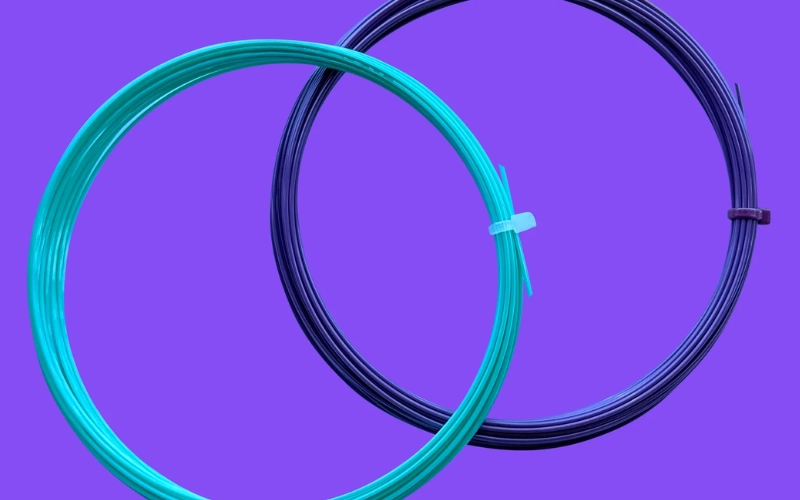
Toroline Stevie is marketed as a more arm-friendly, durable hybrid that sits between a full poly and a traditional poly/multi setup. On court, that intention is partly reflected — but with some caveats.
In the early hours, the stringbed does change noticeably. The first few sessions are where the biggest shift happens, moving from a very muted, slightly disconnected feel into something closer to a standard poly response. Once it settles, playability becomes more consistent:
- After break-in, launch angle and depth remain fairly stable.
- The bed stays comfortable and controlled without becoming harsh.
- Snap-back from the O’Toro Tour mains remains active and reliable.
That said, I can’t yet make a definitive call on long-term durability. I’ve logged just over 10 hours myself without any dramatic drop-off, but this isn’t enough to draw firm conclusions compared to established tension-holding polys. To address that, I’ve strung Stevie into a coach’s racquet that’s seeing several hours of daily hitting, and I’ll update this section once there’s clearer data on how it holds up over extended use.
👉 Overall: early signs suggest respectable tension stability for a comfort-focused hybrid, but durability is still a question mark. If longevity proves strong, Stevie could make sense for players who want a softer, more forgiving setup without going fully multi.
Toroline Stevie – Who it suits
Best For:
- Players looking to move closer to a poly/multi-style setup while retaining more durability than a traditional hybrid.
- Intermediate players who want a comfortable, arm-friendly stringbed without giving up spin and baseline stability.
- Baseliners who prefer a muted, controlled response and value consistency over high feedback.
- Players who like the idea of O’Toro Tour in the mains but want a softer, more forgiving overall feel.
Not For:
- Players who rely heavily on crisp feedback and instant connection to the ball.
- Those chasing maximum responsiveness, touch, or feel at the net.
- Players who already prefer full-bed soft round polys — Stevie may not offer a clear upgrade.
- Anyone expecting a dramatic performance jump over a well-chosen poly or poly/multi hybrid.
Toroline Stevie – Best suited racquets
Toroline Stevie works best in modern, moderately powerful frames where its muted, arm-friendly response can smooth out the racquet’s natural liveliness without killing depth or spin:
- Head Speed MP – a strong pairing that balances the Speed’s easy acceleration with added comfort and a calmer, more controlled response.
- Babolat Pure Drive / Pure Aero – softens impact and takes the edge off power while still allowing good spin and depth.
- Yonex Ezone 98 / 100 – complements the plush feel of the Ezone with extra stability and a more predictable launch.
- Wilson Blade 98 (16×19) – adds comfort and forgiveness compared to a full bed of firmer poly, especially on longer sessions.
In very low-powered or dense 18×20 control frames, Stevie can feel a bit too muted. In those cases, dropping tension slightly or opting for a firmer cross may help restore feedback and ball connection.
Comparable strings
Toroline Stevie sits in an interesting middle ground between a traditional poly/multi hybrid and a modern soft poly. If you’re considering it, these comparisons help frame what it offers (and what it doesn’t):
- Poly / Multi Hybrid (e.g. Luxilon Alu Power / Multifeel) – Stevie delivers a similar arm-friendly, slightly muted response, but with better durability and more consistent control over time. You lose some touch and pocketing versus a true multi, but gain longevity and stability.
- Shaped Poly / Round Poly Hybrid (e.g. Hyper-G / round cross) – Stevie is less lively and less “bite-heavy,” but far more comfortable and forgiving. It trades explosive spin for smoother depth and easier long-session playability.
- Soft Round Poly (e.g. Yonex Poly Tour Pro, Toroline Enso Pro) – Stevie feels more muted and less responsive, but offers a softer impact and a more dampened response overall. If Enso Pro feels a bit too crisp or pingy for you, Stevie is the calmer, friendlier alternative.
Overall, Toroline Stevie works best for players who like the idea of a poly/multi hybrid but want more durability and consistency, without committing to a full bed of firm polyester.
Toroline Stevie – Practible recommendations
Tension: 22–24 kg (48–53 lbs) is a sensible starting range for most intermediate players. If you’re coming from a firmer full poly, you can stay toward the upper end. If comfort is a priority, dropping 1 kg helps without losing stability.
Gauge: Use the standard gauges supplied in the Stevie hybrid. The balance between O’Toro Tour mains and Truffle X crosses already does most of the work in tuning feel vs control.
Setup: Stevie works best exactly as intended — poly mains (O’Toro Tour) with Truffle X in the crosses. It’s not trying to outperform a classic poly/multi on feel, but it does offer more durability and a more muted, arm-friendly response than most full poly beds.
Restringing: Durability is still being assessed. I’ve logged over 10 hours with stable performance so far, but final lifespan will depend heavily on hitter type. I’ve strung this into a coach’s racquet for extended testing and will update once real high-volume data is in.
If you enjoy these string reviews and find them useful, consider buying me a coffee. It helps fund future testing and gives me the time to bring you more honest, in-depth reviews.

1 thought on “Toroline Stevie Hybrid Review: Arm-Friendly Control With Muted Feel”