

Tennis Terms – Whether you’re a total beginner, a weekend warrior, or a lifelong fan — tennis has its own colorful language. From “love” that’s not about feelings to “bagel” that’s definitely not food, these terms shape how we talk, analyze and enjoy the game.
Let’s break down the most important tennis terms — what they are, why they matter, and how they show up in matches.
Tennis Terms
Simple definitions + “why it matters” so beginners understand fast — and fans sound like they’ve been here.
1. Ace
Tennis Terms – Definition: A serve that lands in the correct box and isn’t touched by your opponent’s racquet.
Why it matters: Aces are the best possible point you can win on serve — no rally, no return. Big servers like Goran Ivanisevic and John Isner built careers on them.
Pro tip: If a server hits 10+ aces in a match, they’re usually dictating play.
2. Advantage (Ad)
Tennis Terms – Definition: The point immediately after deuce. If you win it, you’re one point away from the game.
Why it matters: Advantage points are pressure points — a psychological swing zone. Winning a couple of advantages in a row is often what separates winners from worriers.
3. Backhand
Tennis Terms – Definition: A shot made on the non-dominant side of your body (right side for lefties, left side for righties). Two types:
- One-handed
- Two-handed
Why it matters: Some players have one backhand style that’s weapon-grade (think Justine Henin), others use it more to reset rallies. It’s a key identity marker on tour.
4. Break / Break Point
Tennis Terms – Break: When the returner wins a game on the server’s serve.
Tennis Terms – Break point: When the returner is one point away from breaking serve (e.g., 30–40 on return).
Why it matters: Tennis sets are often decided by a handful of breaks. Breaking at the right time — like 4-4 in a set — can flip momentum instantly.
5. Love
Tennis Terms – Definition: Zero points.
For example:
- 15–love = 15–0
- Love–40 = 0–40
Why it matters: Love isn’t affectionate here — it’s a shorthand heavy-hitter of humiliation. Being bageled (0 games) feels like love in tennis: only one side wins.
6. Deuce
Tennis Terms – Definition: When the score in a game reaches 40–40.
Why it matters: From deuce, you must win two consecutive points to win the game, so deuce often creates thrilling, extended rallies.
7. Forehand
Tennis Terms – Definition: The shot hit on your dominant side — typically the most natural and powerful stroke.
Why it matters: A strong forehand lets players dictate play, move opponents around and finish points early.
In tight sets, losing serve due to double faults can lead to breaks at critical junctures.
8. Rally
Tennis Terms – Definition: A sequence of shots where the ball moves back and forth over the net.
Why it matters: Good rallies test fitness, shape strategy, and create classic tennis theatre. Fans love long rallies — they’re the drama of a match.
9. Slice

Tennis Terms – Definition: A shot with underspin that makes the ball stay low and skid.
Why it matters: Slice changes pace and rhythm. It’s a tricky weapon used to distract rhythm-based players or create awkward bounce on grass.
10. Smash
Tennis Terms – Definition: Hard, aggressive overhead hit — usually when the ball is high.
Why it matters: Like a smash dunk in basketball, it’s a guaranteed point (when executed well), and a huge momentum play.
11. Let
Tennis Terms – Definition: A serve that hits the net but still lands in the proper service box and is therefore replayed.
Why it matters: It’s a second chance without penalty. Let calls can save points and rhythm in tight moments.
12. Fault & Double Fault
Tennis Terms – Fault: A serve that lands outside the proper box or violates service rules (e.g., foot fault).
Double Fault: When both serve attempts fail and the opponent wins the point without returning a ball.
Why it matters: Double faults are free points given away — they can swing games if they stack up.
13. Set
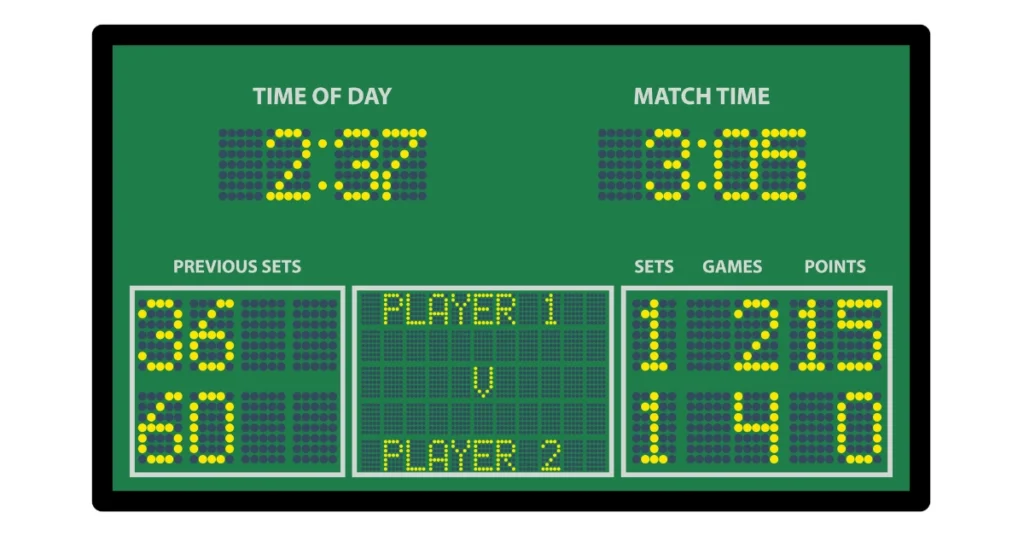
Tennis Terms – Definition: The first player to win 6 games by at least two wins a set.
Tiebreakers: When it’s 6–6, many formats use a 7-point (or longer) tiebreak to decide the set [1].
Why it matters: Sets build the match structure. Winning a tight first set often yields confidence and tactical control.
14. Match
Tennis Terms – Definition: The full contest — typically best of three sets on tour, and best of five for some men’s majors.
Why it matters: Matches vary in length and intensity. Some swing quickly (straight sets), others go long into deciding frames.
15. Unforced Error
Tennis Terms – Definition: A mistake made by the player without significant pressure from an opponent’s shot.
Why it matters: Reducing unforced errors is about tactical discipline. Pros like Djokovic minimize these to grind out wins.
16. Winners
Tennis Terms – Definition: A shot that earns a point outright — the opponent can’t touch it.
Why it matters: Tracking winners (and unforced errors) tells you who’s controlling play.
17. Net Cord (Let Cord)
Tennis Terms – Definition: A ball that touches the net on its way over.
- On serve: if it lands in the box → let
- During play: it’s in play
Why it matters: Net cords produce unpredictable angles — they’re tiny flicks of luck that fans cheer and players brace for.
18. Drop Shot

Tennis Terms – Definition: A soft shot just barely over the net.
Why it matters: Drop shots are tactical surprise plays — they can dismantle heavy-hitting players by changing pace and forcing quick forward movement.
19. Rally Length
Tennis Terms – Definition: The number of shots in a rally.
Why it matters: Predicting short vs long rallies influences strategy:
- Big servers hit quick points.
- Defensive players aim for long rallies.
20. Baseline vs. Approach Shot vs. Volley
- Baseline: The back line of the court — most rallies start here.
- Approach Shot: Taken when a player moves toward the net.
- Volley: A shot hit before the ball bounces — usually at the net.
Why it matters: The interplay of these defines styles:
- Baseline grinders
- Serve-and-volley players
21. Foot Fault
Tennis Terms – Definition: A serving error where the server’s foot crosses the baseline before hitting the serve.
Why it matters: It’s a technical but often overlooked loss of precision — and counts as a fault just the same.
22. Grip Types (Continental, Eastern, Western)
- Continental: Great for serves and volleys
- Eastern: Neutral for groundstrokes
- Western: Heavy topspin emphasis
Why it matters: Grip changes alter spin and control — critical when tailoring strategy to surface or opponent.
23. Surface Types
- Hard Court
- Clay
- Grass
Each surface affects ball speed, spin and bounce — and thus how the terms above play out in real matches.
24. Let’s Talk Commentary Terms
Tennis Terms – You’ll also hear:
- Love-15 / Love-40: Zero points for server
- Mini Break: In a tiebreak, when the returner wins a point on opponent’s serve
- Bagel: Winning a set 6–0
- Breadstick: Winning a set 6–1
These terms add personality and interactivity to match watching.
Final thoughts
Tennis terms might seem like jargon at first, but they’re really the language that makes the sport come alive. Whether you’re analyzing a match, giving tips to a friend, or simply watching with more knowledge, mastering these terms brings you closer to the game’s depth and excitement.
So next time someone says a player “saved break point, hit a backhand winner, then closed the set with an ace,” you won’t just understand it — you’ll feel what’s happening.
If you enjoyed this article, you might also enjoy What is an Ace in tennis? here.
