
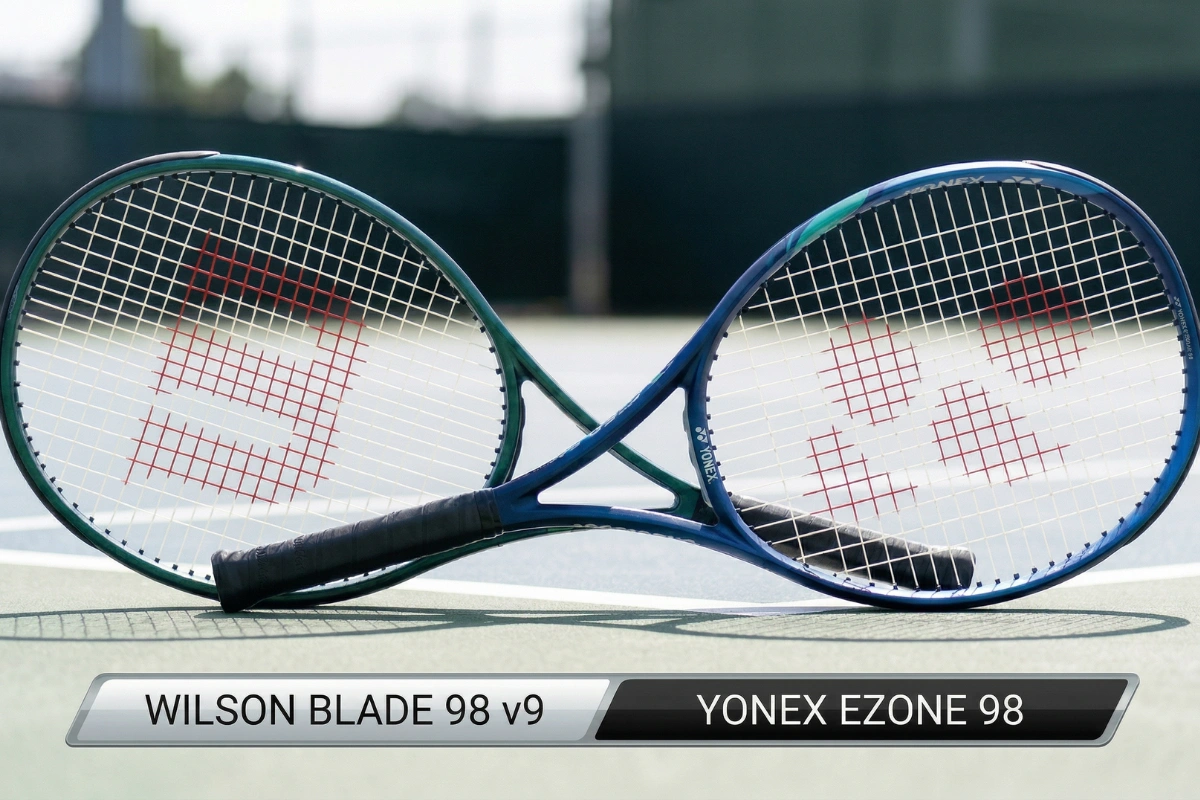
Wilson Blade 98 vs Yonex EZone 98 – Both the Wilson Blade 98 and Yonex EZone 98 stand as elite control racquets at 98 square inches, beloved by advanced players worldwide — but they solve the control puzzle in fundamentally different ways. Understanding these differences is critical, because the wrong choice can leave you either fighting for power or sacrificing the precision you’re seeking.
The Core Philosophy: Control Through Different Lenses
Wilson Blade 98 vs Yonex EZone 98 – The Wilson Blade represents the precision purist approach: a flexible, responsive frame built on feel and feedback that rewards clean technique. Every strike delivers honest communication about where and how you hit the ball. The Blade demands commitment — it won’t forgive lazy swings or poor timing.
The Yonex EZone 98, by contrast, represents the confident stability approach: a slightly stiffer frame with excellent dampening that delivers power and consistency while remaining remarkably comfortable. The EZone is more forgiving, more immediate, and requires less break-in time to feel confident.
Specifications: Wilson Blade 98 vs Yonex EZone 98
Wilson Blade 98 vs Yonex EZone 98 – The Blade runs slightly more head-heavy (4 pts HL vs 6 pts HL), contributing to its plow-through potential. The EZone runs slightly stiffer and features variable beam construction — thicker in the hoop for power, thinner in the face for comfort. These small differences compound into dramatically different feels on court.
Two elite 98 sq. in. control racquets with fundamentally different philosophies. Direct side-by-side comparison to help you choose the right frame for your game.
Core Specifications Dimensions
Wilson Blade 98
- Head Size: 98 sq in
- Weight: ~305g unstrung
- Balance: 32cm (4 pts HL)
- Stiffness: 62 RA
- Beam: Consistent 21mm
Yonex EZone 98
- Head Size: 98 sq in
- Weight: ~305g unstrung
- Balance: 31.5cm (6 pts HL)
- Stiffness: 63-65 RA
- Beam: Variable 23.8-24.5mm
Beam Profile & Engineering Construction
Wilson Blade 98
- Philosophy: Uniform flex for consistent feedback
- Throat Geometry: Refined v10 taper mold
- Focus: Responsiveness & feel priority
- Benefit: Improved off-center stability (v10)
Yonex EZone 98
- Philosophy: Variable beam for power & comfort
- Design: Thicker hoop, thinner face
- Focus: Stability & power priority
- Benefit: Excellent torsional rigidity
String Pattern & Customization Options
Wilson Blade 98
- 16×19 Pattern: Open, spin-friendly
- 18×20 Pattern: Tight, control-optimized (exclusive)
- 18×20 Users: Tsitsipas, Sabalenka
- Customization: Maximum choice
Yonex EZone 98
- 16×19 Pattern: Open, versatile
- 18×20 Alternative: None (custom only)
- Limitation: Locked into one pattern
- Advantage: Simplicity & consistency
Feel & Player Experience Feedback
Wilson Blade 98
- Feedback: Direct, unfiltered
- Communication: Every shot teaches you
- Break-In: 4-6 weeks to dial in
- Best For: Technicians & precision players
Yonex EZone 98
- Feedback: Smooth, dampened
- Communication: Prioritizes confidence
- Break-In: Immediately playable
- Best For: Aggressive hitters & confidence seekers
Power & Stability Under Pace Performance
Wilson Blade 98
- Power: Moderate; requires technique
- Depth: Comes from clean, full swings
- Stability: Enhanced (v10 throat geometry)
- Pace Defense: Resists well, very controlled
Yonex EZone 98
- Power: Effortless & immediate
- Depth: Delivered automatically
- Stability: Exceptional torsional rigidity
- Pace Defense: Absorbs heavy pace smoothly
The Verdict: Who Should Choose What? Decision
Choose Blade 98 if:
- You value feel & feedback
- You play control-first tennis
- You want the 18×20 option
- You prioritize touch & volleys
- You have strong technique
Choose EZone 98 if:
- You want immediate confidence
- You play aggressive baseline tennis
- You crave effortless depth
- You prefer arm-friendly comfort
- You demand stability under pace
Both racquets are elite 98 sq. in. choices. The Blade rewards precision; the EZone rewards power. Your choice depends on playing style and what matters most: feel or consistency.
Control & Precision: The Blade’s Territory
Wilson Blade 98 vs Yonex EZone 98 – Here’s where the Blade v10 truly excels: pure directional control and feel. The Blade’s magic lies in its consistent 21mm beam profile and lower swingweight, creating a frame that talks to you constantly. Off-center hits feel different from center hits. Flat strikes feel different from topspin strokes. The frame provides immediate, honest feedback about your technique — which is exactly what precision-focused players crave.
The 18×20 string pattern option (exclusive to Blade among these two) is a game-changer for control players. That tighter stringbed locks down the sweetspot, reduces string movement, and delivers laser-like directional control. Players like Stefanos Tsitsipas specifically choose the 18×20 because it transforms the Blade into an absolute precision instrument.
The EZone, by contrast, prioritizes stability over feedback. Its wider beam construction and higher stiffness rating mean less flex, less vibration, and less detailed communication at contact. This trade-off is intentional — the EZone is designed for players who want confidence and plow-through over millimeter-level precision. You still get control, but it’s stability-based control rather than feel-based control.
Winner for control: Blade 98 — but only if you value feel and feedback. If you want stability-based control that requires less feedback interpretation, the EZone edges ahead.
Power & Consistency: EZone’s Counter-Argument
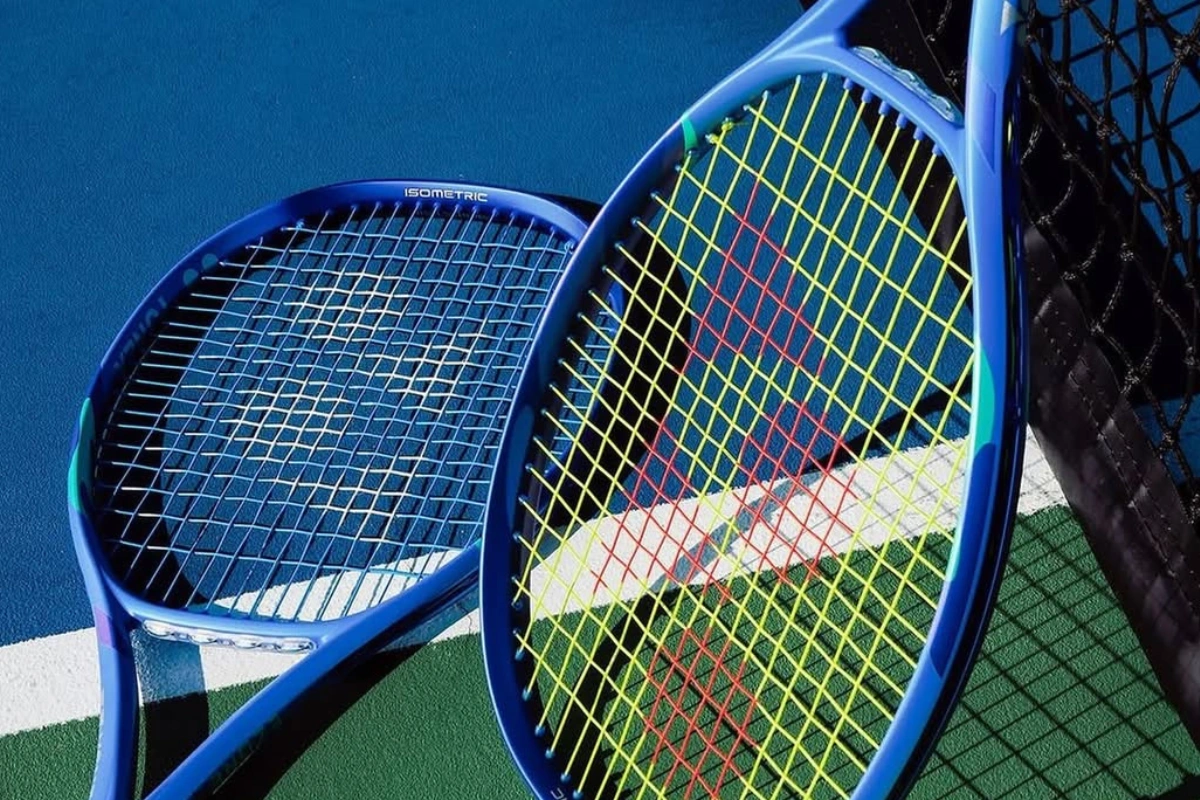
Wilson Blade 98 vs Yonex EZone 98 – Where the EZone strikes back is effortless consistency and plow-through power. The Yonex EZone 98 delivers more inherent power than the Blade thanks to its stiffer frame and excellent ball dampening. Players switching from Blade to EZone consistently report one thing: more depth, more pace, less effort. The EZone handles both flat and spin shots effectively, and that 16×19 pattern keeps things versatile without sacrificing consistency.
Advanced players who tested both racquets reported that while the Blade requires more stroke commitment to generate depth, the EZone delivers depth almost automatically. For match play against heavy hitters, the EZone’s superior stability under pace is noticeable — the frame doesn’t twist as much on off-center impacts.
The Blade v10, with its refined throat geometry and enhanced StableFeel technology, has closed this gap significantly compared to earlier generations. The wider taper mold actually improves stability while maintaining feel. But the fundamental design philosophy remains: the Blade expects you to bring your best technique to unlock its potential.
Winner for power & consistency: EZone 98 — it simply delivers more plow-through with less technique demand.
Feel, Comfort & Arm-Friendliness
Wilson Blade 98 vs Yonex EZone 98 – This is where things get interesting because both racquets approach comfort differently. The EZone 98 is objectively more arm-friendly out of the box. At 63-65 RA stiffness with excellent Yonex dampening technology, it absorbs vibration beautifully. Even with a firm polyester string at higher tensions, the EZone feels smooth and connected. Players with elbow or wrist sensitivity gravitate here because the racquet does substantial work to reduce impact shock.
The Blade, however, offers something different: responsive feel without harshness. Yes, it’s more flexible (62 RA), which means more vibration reaches your arm. But the quality of that vibration is clean — it tells you exactly what happened at contact without being punishing. Many Blade players actually prefer this direct feedback; it helps them refine technique and build consistency through feel rather than pure forgiveness.
String choice matters enormously on the Blade. Pair it with a softer poly like Grapplesnake Tour M8 or a hybrid setup, and the Blade becomes remarkably comfortable while maintaining that signature feedback.
Winner for comfort: EZone 98. Winner for connected feel: Blade 98. Your choice depends on whether you prioritize arm protection or technical feedback.
Volleys & Touch Shots: Blade’s Secret Advantage
Wilson Blade 98 vs Yonex EZone 98 – One aspect where the Blade often surprises people is net play and touch shots. The Blade’s frame flexibility combined with its feedback-rich nature makes volleys feel confident and controlled. You can carve precise angles, stick volleys deep, or execute delicate drop volleys because you feel the contact point clearly. Advanced players specifically praise the Blade for its volley consistency.
The EZone 98 volleys well too — its stability is excellent at net — but the slightly muted feel can make touch shots feel less connected. You’re more reliant on technique and less able to adjust based on instant feedback.
Winner for volleys and touch: Blade 98.
Professional Endorsement & Lineup
Wilson Blade:
• Stefanos Tsitsipas (Blade 98 18×20)
• Madison Keys (transitioning from Blade)
• Aryna Sabalenka (Blade 98 18×20)
• Elite competitors demanding maximum control
Yonex EZone:
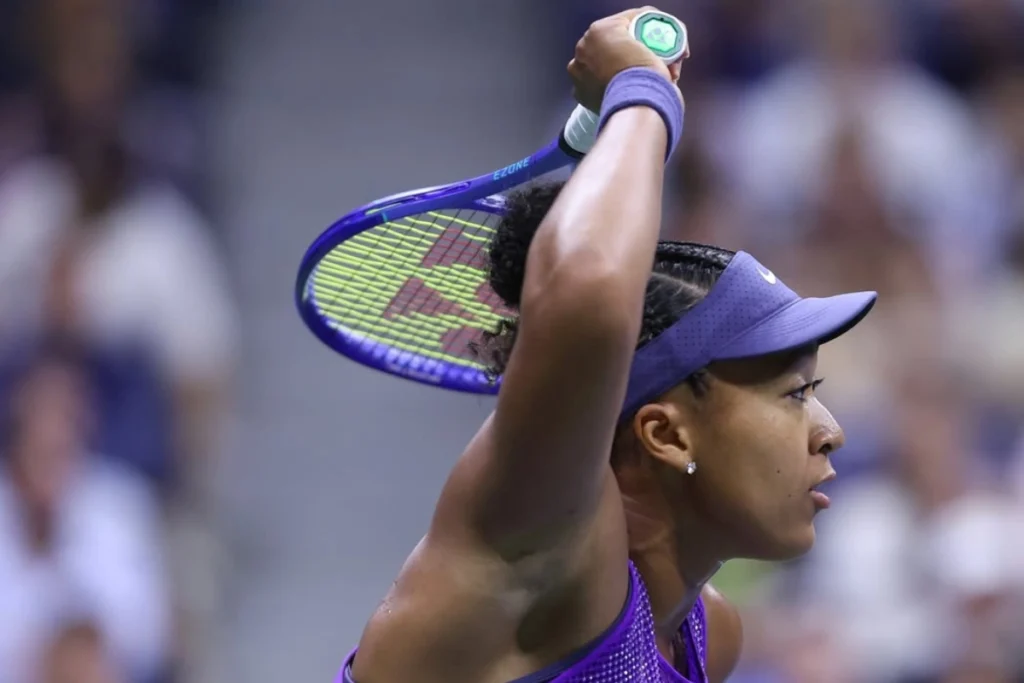
• Naomi Osaka (Ai 98)
• Nick Kyrgios (Xi 98)
• Denis Shapovalov (custom 18×20 spec)
• Madison Keys (recently switched FROM Blade TO EZone)
The pro lineup reveals the positioning: Blade users tend to be control-obsessed technicians; EZone users tend to be powerful, aggressive baseliners who want easy consistency.
String Pattern Options & Customization
Wilson Blade 98 vs Yonex EZone 98 – While the Wilson Blade 98 and Yonex EZone 98 compete in the same weight class and court type, their approach to string patterns tells a fundamentally different story about player freedom versus optimized balance
String pattern choice separates these two racquets dramatically. The Blade offers critical customization with both 16×19 and 18×20 options, while the EZone is locked into 16×19. This single difference can determine whether a frame suits your precision needs or forces compromise.
| Racquet | Pattern | String Characteristics | Best Player Type | Control vs Spin Trade-off |
|---|---|---|---|---|
| Wilson Blade 98 | 16×19 (Open) | More open spacing allows string movement and snap-back. Higher RPM potential, more forgiving on timing, easier launch angle generation. | Aggressive baseliners, spin-oriented players, players seeking power + control balance. | ⭐⭐⭐⭐ Spin | ⭐⭐⭐ Control |
| Wilson Blade 98 | 18×20 (Tight) — Exclusive Option | Tighter stringbed restricts string movement, maintains precise stringbed plane, laser-sharp directional control, reduced power but elite consistency. | Precision technicians, touch/volley specialists, Tsitsipas/Sabalenka archetype — control obsessives. | ⭐ Spin | ⭐⭐⭐⭐⭐ Control |
| Yonex EZone 98 | 16×19 (Open) — Only Option | Single 16×19 pattern optimized for Yonex’s variable beam geometry. Balanced spin/control, excellent consistency, no customization available. | Aggressive hitters, players wanting “just works” reliability, power players prioritizing effortless depth. | ⭐⭐⭐ Spin | ⭐⭐⭐ Control |
| Blade 18×20 | Professional Players | Stefanos Tsitsipas, Aryna Sabalenka, Madison Keys (before switch) — all chose 18×20 specifically for maximum directional control and precision feel. | Elite competitors requiring maximum control in high-pressure environments. | ⭐ Spin | ⭐⭐⭐⭐⭐ Control |
| EZone Customization | No 18×20 | Denis Shapovalov famously requested a custom 18×20 EZone because the 16×19 didn’t meet his control demands — unavailable at retail, only pro-spec custom. | Players wanting EZone’s stability + power but needing Blade-level control (rarely available). | Custom only — not accessible to recreational players. |
| Verdict | Winner: Blade 98 | The Blade’s dual-pattern offering gives players precise customization: 16×19 for spin seekers, 18×20 for control obsessives. EZone forces compromise with one fixed pattern. | Choose Blade if string pattern choice matters to your game. Choose EZone if one pattern fits your style perfectly. | Blade = Maximum Customization | EZone = One Perfect Pattern |
The 18×20 exclusive to Blade is significant: it’s the only way to pair 98 sq. in. competitive sizing with maximum directional control. For control-first players, this single difference can be the deciding factor.
The Verdict: Which Should You Choose?
| Factor | Wilson Blade 98 | Yonex EZone 98 |
|---|---|---|
| Primary Philosophy | Precision feel & feedback | Stability & effortless consistency |
| Best Player Type | Precision technician, control obsessive | Aggressive baseliner, power seeker |
| String Pattern Choice | 16×19 OR 18×20 (maximum customization) | 16×19 only (locked configuration) |
| Feel & Feedback | ⭐⭐⭐⭐⭐ Direct, unfiltered communication | ⭐⭐⭐ Smooth, dampened feedback |
| Power Generation | ⭐⭐⭐ Moderate; requires technique | ⭐⭐⭐⭐⭐ Effortless, automatic |
| Stability Under Pace | ⭐⭐⭐⭐ Enhanced (v10 throat geometry) | ⭐⭐⭐⭐⭐ Exceptional torsional rigidity |
| Control & Precision | ⭐⭐⭐⭐⭐ Elite directional control | ⭐⭐⭐⭐ Stability-based control |
| Arm-Friendliness | ⭐⭐⭐ (depends on string choice) | ⭐⭐⭐⭐⭐ Excellent dampening |
| Break-In Period | 4-6 weeks (rewards adaptation) | Immediate (plays well from day one) |
| Volley & Touch Quality | ⭐⭐⭐⭐⭐ Crisp, connected feel | ⭐⭐⭐⭐ Solid, confident response |
| Depth on Defense | ⭐⭐⭐ (requires clean technique) | ⭐⭐⭐⭐⭐ (automatic, forgiving) |
| Professional Players | Tsitsipas, Sabalenka, Keys (former) | Osaka, Kyrgios, Shapovalov |
| Price Point | ~$229–249 USD | ~$219–239 USD |
| Choose This If You… |
• Value feel & feedback above all • Play control-first tennis • Want 18×20 string pattern option • Prioritize touch & volleys • Have strong, developed technique • Are willing to break in a racquet |
• Want immediate confidence • Play aggressive baseline tennis • Crave effortless depth • Prefer arm-friendly comfort • Demand stability under heavy pace • Want a “just works” racquet |
| Overall Winner For: |
Precision & Control (Hands down the control frame) |
Power & Consistency (Effortless performance) |
Bottom Line: Both racquets are elite 98 sq. in. choices. The Blade rewards precision and technique; the EZone rewards power and effortless consistency. Your choice depends on whether you prioritize feedback or stability, control or power, and whether you value feel over forgiveness.
Final thoughts – Wilson Blade 98 vs Yonex EZone 98
Both racquets are elite choices at 98 square inches. The Blade remains the control connoisseur’s preference — a frame that teaches you and rewards precision. The EZone remains the confident aggressor’s choice — a frame that enables power and consistency with minimal technique demand.
The best choice ultimately depends on your playing style, how much feel matters to you, and whether you value responsive feedback or stable forgiveness. For recreational advanced players building consistency, the EZone edges ahead. For competitive players seeking maximum precision and control potential, the Blade v10 remains unmatched. Let me know in the comments what you end up with as your weapon of choice!
If you enjoyed this breakdown, you might also like my article on Yonex MUSE Review.
