
If you’ve ever watched a tennis match, whether it was a late-night Grand Slam thriller or a local club battle, you’ve probably heard commentators talk about a break point in a dramatic way. And for a good reason. One of the most important parts of any match is the break point. It’s a psychological test, a chance for the other team to get back in the game, and sometimes the difference between winning and losing.
What is a break point in tennis? In short, a break point is when the person returning is one point away from winning the game. Breaking serve, or winning a game against the server, is a big deal because the serve usually gives the player a natural advantage. And when a player has a chance to do it, the scoreboard says “BREAK POINT.”
There is a lot more to break points than what you see on the screen. Below is a more in-depth look at what break points are, why they are important, how players deal with them, and how they affect the flow of modern tennis.
What is a break point
What is a break point in tennis? A break point occurs when the returner is ahead in the game and only needs one more point to win the game being played on the opponent’s serve.
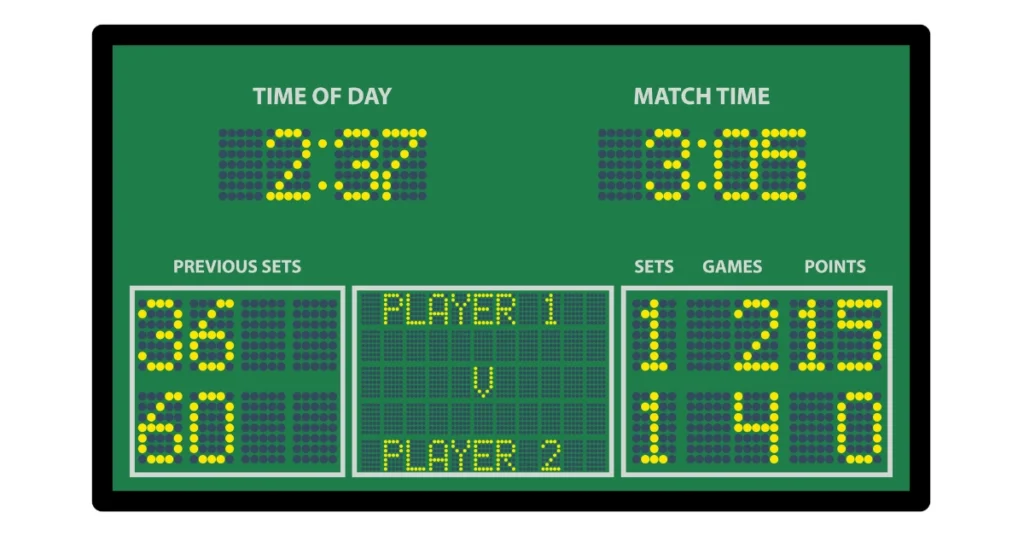
This happens at the following game scores (returner leading):
- 0–40
- 15–40
- 30–40
- Advantage (if the game reaches deuce)
If the server loses that next point, the returner breaks serve—hence the name “break point.”
Breaking serve is considered a big achievement because serving is the biggest built-in advantage in tennis: players can dictate the point with pace, angle, and spin from the very first shot.
Why break points matter so much
Break points are arguably the most high-pressure moments in tennis outside of tiebreaks and match points.
Here’s why:
1. They swing momentum
A single break can completely change the rhythm of a match.
Many sets are decided by one break of serve, especially in men’s tennis or when two players are evenly matched.
2. They expose nerves
Handling pressure separates great players from good ones.
You see it clearly on break points—does the server stay brave, or tighten up? Does the returner seize the moment or hesitate?
3. They tell the story of the match
Sometimes a player is dominating from the baseline but struggling to convert break points. Other times someone “clutches up” and saves 10 break points in a set. Break-point conversion and break-point saves often reflect a player’s mental strength under pressure.
4. Winning a break point ≠ winning the match
Federer, Nadal and Djokovic have all dominated matches despite being outplayed on break points. Handling pressure is an art.
Different types of break point
Not all break points are equal. You’ll often hear these terms:
| Break Point Type | What It Means |
|---|---|
| Standard Break Point | One point away from breaking serve (e.g. 40–30, 15–40, 0–40). |
| Double Break Point | The returner has two chances to break (e.g. 15–40) — their odds of breaking increase significantly. |
| Triple Break Point | A dominant position at 0–40 — the server is under maximum pressure with three break chances to defend. |
| Ad Break Point | After deuce, if the score is “Advantage Returner,” they have a break point and must win that point to break. |
| Break-Back Point | A break point for a player who has already been broken earlier in the set and now has a chance to break back immediately. |
How players hand break points mentally

This is where tennis becomes chess.
Servers under pressure
Most servers try to:
- Hit a high-percentage first serve
- Aim for their favourite spot
- Use a serve + 1 pattern they trust
Champions like Djokovic often raise their level dramatically on break points—his first-serve percentage on break points is consistently higher than in normal points.
Returners under pressure
Strong returners try to:
- Stand in their preferred returning position
- Anticipate the server’s go-to pattern
- Avoid over-pressing—just getting the point started can be enough
Nadal, for example, plays break points with extraordinary discipline, rarely giving away a free error.
Break points in famous matches
Some of the biggest matches in tennis history have been defined by break points.
Federer vs Djokovic – US Open 2011 Semifinal
Federer held two match points on Djokovic’s serve (technically break-back points AND match points). Djokovic saved both and won the match.
Nadal vs Medvedev – Australian Open 2022 Final
Nadal’s comeback from two sets down included multiple crucial break-point conversions, each one shifting the momentum.
Serena Williams vs Azarenka – US Open battles
Serena’s ability to save break points with huge first serves was a defining weapon.
Conclusion
A break point in tennis is far more than just a scoring situation. It’s a miniature battle within the match—a psychological duel, a test of courage, and a moment that can swing momentum instantly.
Whether you’re a beginner trying to understand tennis scoring, a casual fan watching Wimbledon, or a competitive player looking to improve your mental game, grasping how break points work adds a new layer of appreciation for the sport.
Enjoyed this breakdown? Check out my guide on how big a tennis court really is — a simple explanation every tennis fan should know.

2 thoughts on “What Is a Break Point in Tennis? A Complete Guide for Fans”