
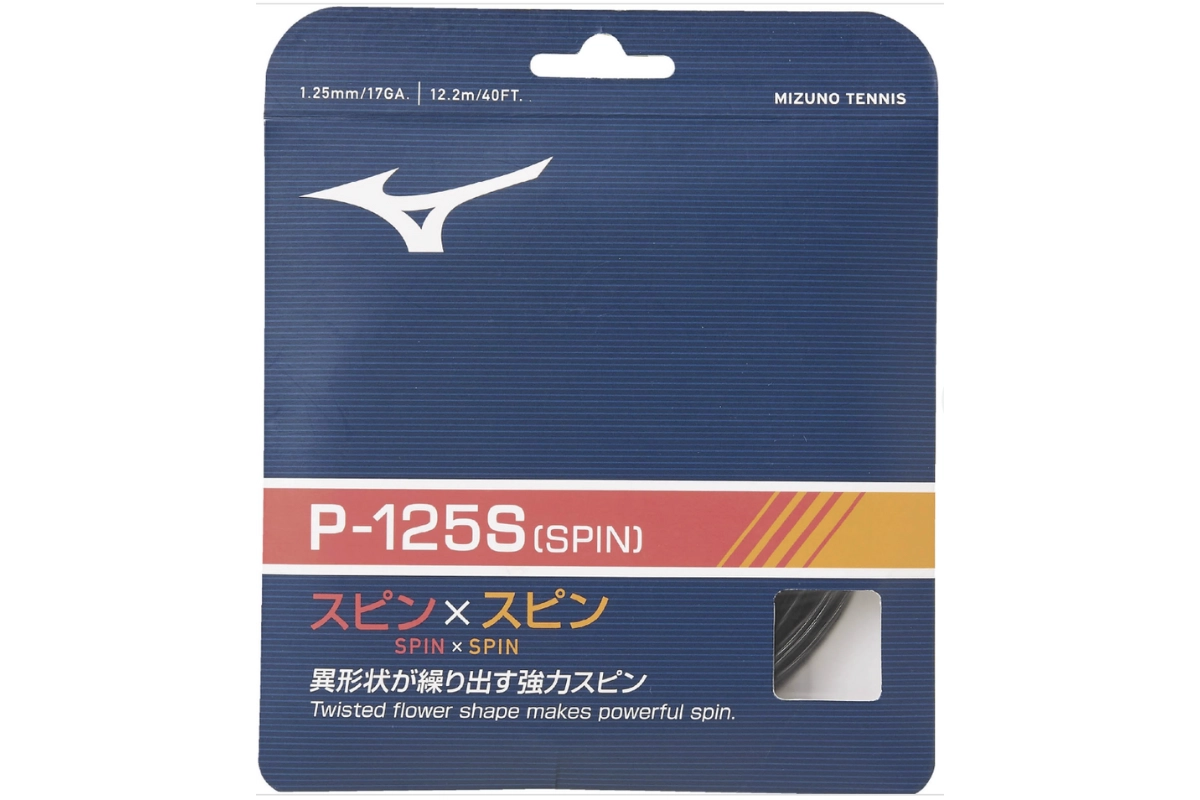
Mizuno P-125S is a spin-friendly co-poly aimed at players who want a crisp response and good rotation without going full “dead control board.” It has a lively, responsive feel when fresh, and it can produce a heavy ball when you accelerate.
But here’s the honest part: control isn’t great compared to the best modern performance polys, and tension holding is only mid-pack. That means the stringbed tends to feel “less locked in” sooner than you want, especially if you hit flatter or you’re trying to paint lines under pressure. I’d position P-125S as “spin + pop with a shorter stability window,” not as a tournament-consistent control string.
Quick verdict
Mizuno P-125S is a spin-leaning poly with a crisp, lively response and good access to rotation. The trade-off is predictability: directional control isn’t its strength, and as tension settles the stringbed can start launching a bit freer than you’d like.
👉 Ideal if you want spin + a lively feel. Not ideal if you want laser control or a string that stays identical across many sessions.
What the numbers say
Below are the reference measurements for Mizuno P-125S:
Mizuno P-125S — Performance Scores
👉 In short: Mizuno P-125S is built for accessible spin and a lively response (Spin 85 / Power 70), but it gives up elite control and long-term stability (Control 62 / Tension Holding 65 / Stability 55).
How it plays (feel, spin, power, control)
Mizuno P-125S — On court, P-125S feels crisp and responsive with a slightly lively edge. The ball comes off the stringbed with a clean, modern poly snap, especially when you accelerate through contact. It’s not a dead, boardy control string — it’s more of a “spin + response” setup.
Power is medium. You get respectable depth without feeling like the string is launching uncontrollably, but you still need to swing with intent to produce a heavy, penetrating ball.
Spin is the standout trait. P-125S gives you easy access to rotation through decent snapback and bite, helping the ball clear the net with shape and dip back into the court. It suits players who use topspin to control trajectory rather than hitting flat lasers.
Control is serviceable but not a strong point. When fresh, targeting is manageable, but it never feels truly “on rails.” As tension settles, directional precision drops and the launch angle becomes less predictable, so you’ll either need to add more spin margin or restring sooner than you would with more stable control-focused polys.
Pros and Cons
Mizuno P-125S – Here’s a quick pros and cons snapshot for Mizuno P-125S:
Durability & tension maintenance
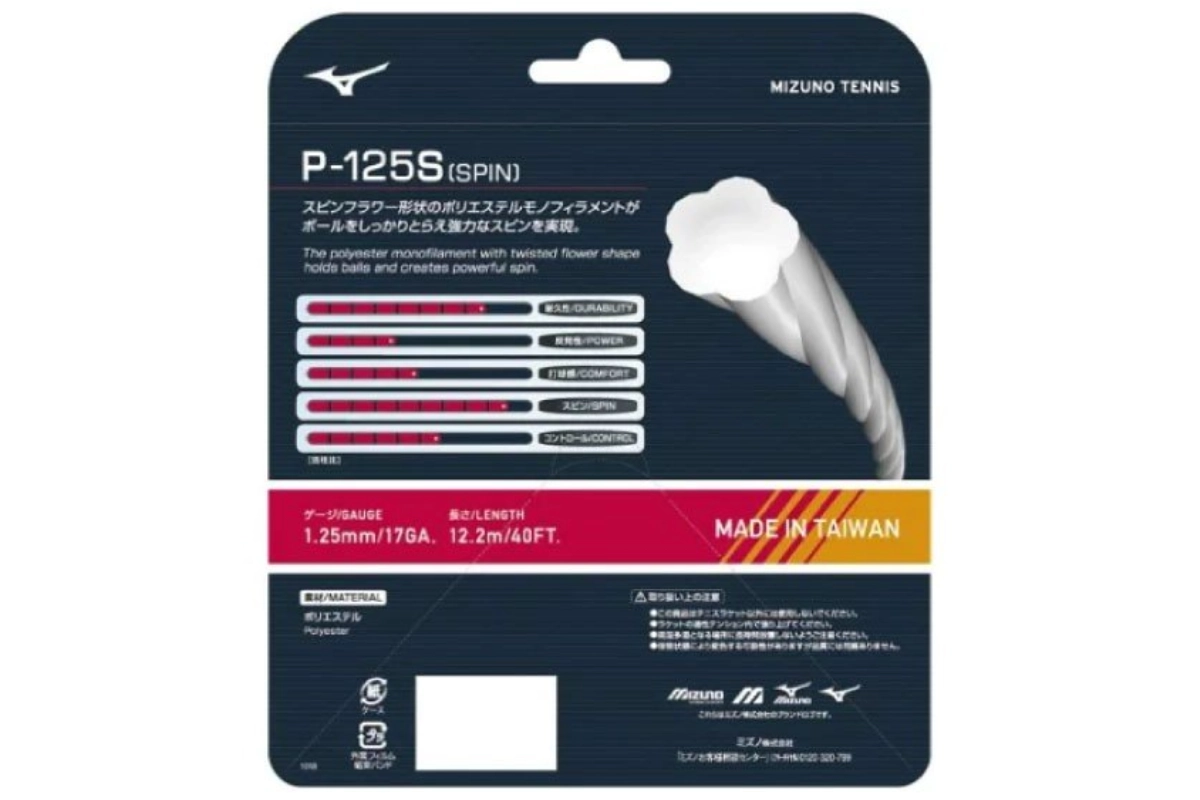
Mizuno P-125S – This string also plays in clear phases:
Fresh (0–3 hrs): Best balance of spin, feel, and usable control. The stringbed feels crisp and responsive, with the most predictable launch window during this period.
Mid (3–8 hrs): Still playable, but you’ll notice the bed softening. Launch angle creeps up slightly and directional precision starts to feel less defined, especially on flatter swings.
Late stage: Tension loss becomes more noticeable. The response feels looser, depth control becomes inconsistent, and balls can start flying unless you add extra spin margin.
👉 If you like how P-125S plays early on, don’t overextend it — restring once control starts drifting and the stringbed loses that crisp, structured feel.
Who it suits
Best For:
- Players who want easy access to spin with a crisp, responsive feel
- Baseliners who use shape and net clearance rather than pure flat hitting
- Those who enjoy a lively stringbed and don’t mind restringing once performance drops
- Modern topspin forehands, heavy cross-courts, and spin-based serve patternskicking serves
Not For:
- Players who want elite control and pinpoint directional precision
- Anyone expecting long tension life and “same at hour 12” consistency
- Flat hitters who drive through the court and rely on a firm, locked-in response
- Players who prefer a dead, ultra-stable control poly
Best suited racquets
Mizuno P-125S works best in modern, spin-friendly or slightly more powerful frames where the added rotation and lively response help produce heavy ball without making the launch uncontrollable:
- Babolat Pure Aero / Aero 98 — enhances spin and net clearance; suits players who attack with shape and height.
- Yonex VCORE 98 / 100 — strong mix of pocketing and rotation; helps create a sharper dip on heavy topspin shots.
- Head Extreme MP / Extreme Tour — complements the frame’s natural launch and spin profile with a crisp, energetic feel.
- Wilson Shift 99 / Ultra 100 — adds easier access to depth and rotation for aggressive baseline play.
In smaller head sizes (95-97 sq in and below), P-125S can feel a bit underpowered and less forgiving, with its average stability making the response feel inconsistent. Players using these tighter, control-oriented frames will usually get better results from a slightly more powerful, livelier poly that adds pop and depth more easily.
Comparable strings
If you are considering Mizuno P-125S, you might also want to consider:
Comparable Strings — “Overall Fit” Snapshot
Indicative scores (not lab data) — a quick visual to show where Mizuno P-125S sits vs stronger-performing alternatives.
Practible recommendations
Tension: 22–24 kg (48–53 lbs) is a strong starting range for most intermediate/advanced players. If you want tighter control, go +1 kg. If you want more comfort and pocketing, drop 1 kg.
Setup: Best as a full bed if you want the cleanest spin-friendly, lively response. If you want it to stay “together” longer, consider a hybrid with a firmer, more stable cross (you’ll lose a little raw snap, but gain predictability and directional stability).
Restringing: Because control and stability drift as the bed settles, treat P-125S as a fresh-window poly. If you feel launch creeping up or targets getting fuzzy, cut it out early—don’t ride it into the “loose and unpredictable” zone.
If you enjoy these string reviews and find them useful, consider buying me a coffee. It helps fund future testing and gives me the time to bring you more honest, in-depth reviews

