
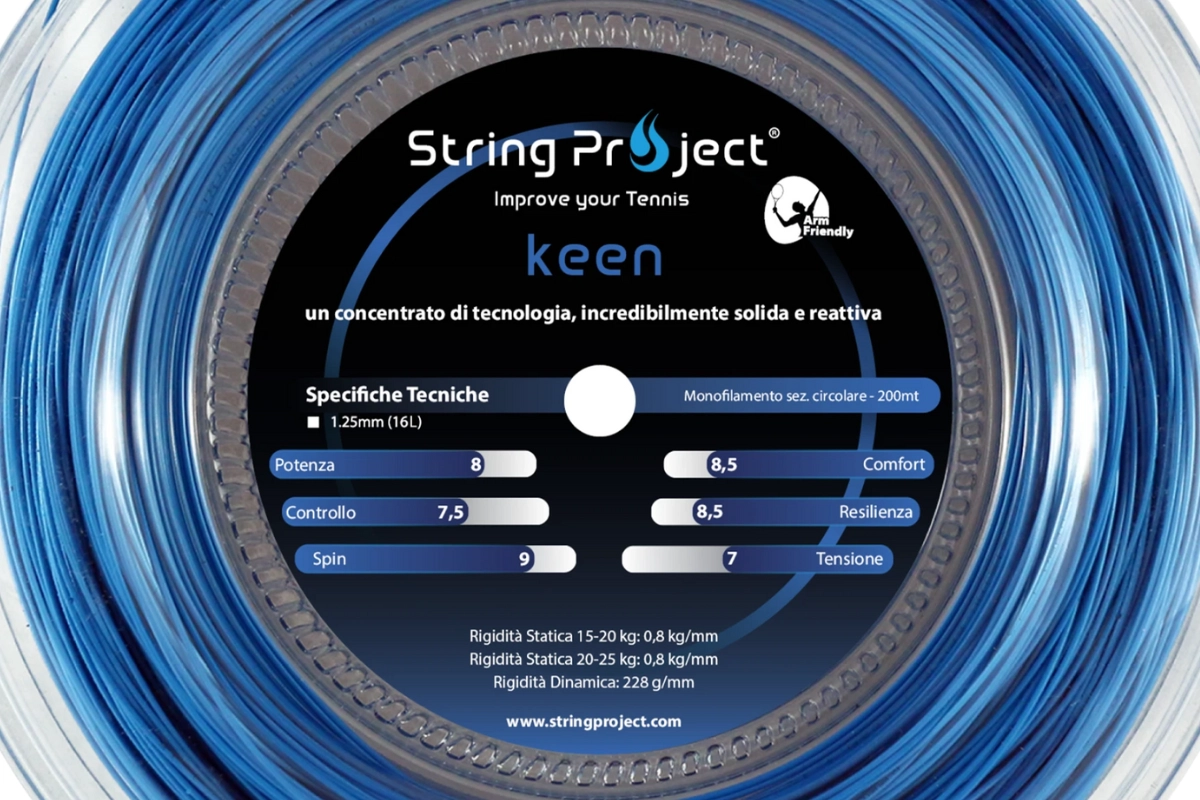
String Project Keen Blue is a spin-leaning co-poly built for players who want the ball to jump off the strings with heavy shape and a lively “snap” response. Think high RPMs + elastic rebound, with medium control and a shorter playability window than the best tension-holding polys. If you’re the kind of hitter who loves a freshly strung, energetic stringbed (and you don’t mind restringing more often), Keen Blue makes a lot of sense. I’d position it as “fun, fast, spinny” rather than “locked-in and stable for 12 hours.”
Quick verdict
String Project Keen Blue is a spin monster with a lively rebound. The stringbed feels elastic and whippy, helping the ball bite and jump, especially when you accelerate. The trade-off is that it’s not a “set-and-forget” string: tension holding and stability are the weak points, so the response can change noticeably as hours stack up.
👉 Ideal if you want maximum spin + a lively feel. Not ideal if you want rock-solid predictability across many sessions.
What the numbers say
Below are the reference measurements for String Project Keen Blue:
String Project Keen Blue — Performance Scores
👉 In short: Keen Blue is built to spin + rebound (Spin 100 / Resilience 90), but it gives up tension stability and long-session consistency (Tension Holding 55 / Stability 55).
How it plays (feel, spin, power, control)
String Project Keen Blue – On court, Keen Blue feels lively, elastic and snappy. The ball leaves the stringbed with noticeable kick, especially when you accelerate through the contact. It’s not a dead, linear control poly — it’s a “shape + pop” string.
Power is medium-high for a poly. You’ll get easy depth from the rebound, but you still need decent racket-head speed to keep it heavy and safe.
Spin is the headline. Keen Blue rewards fast swings with a high-RPM ball that dips late. If you like creating height over the net and watching it bite down, this is very much in that lane.
Control is good when fresh, but it’s not the same “locked-in rail” you get from firmer control strings. As tension drops, you’ll want to tighten your targets and/or cut it out earlier.
Pros and Cons
String Project Keen Blue – Here’s a quick pros and cons snapshot for String Project Keen Blue:
Durability & tension maintenance
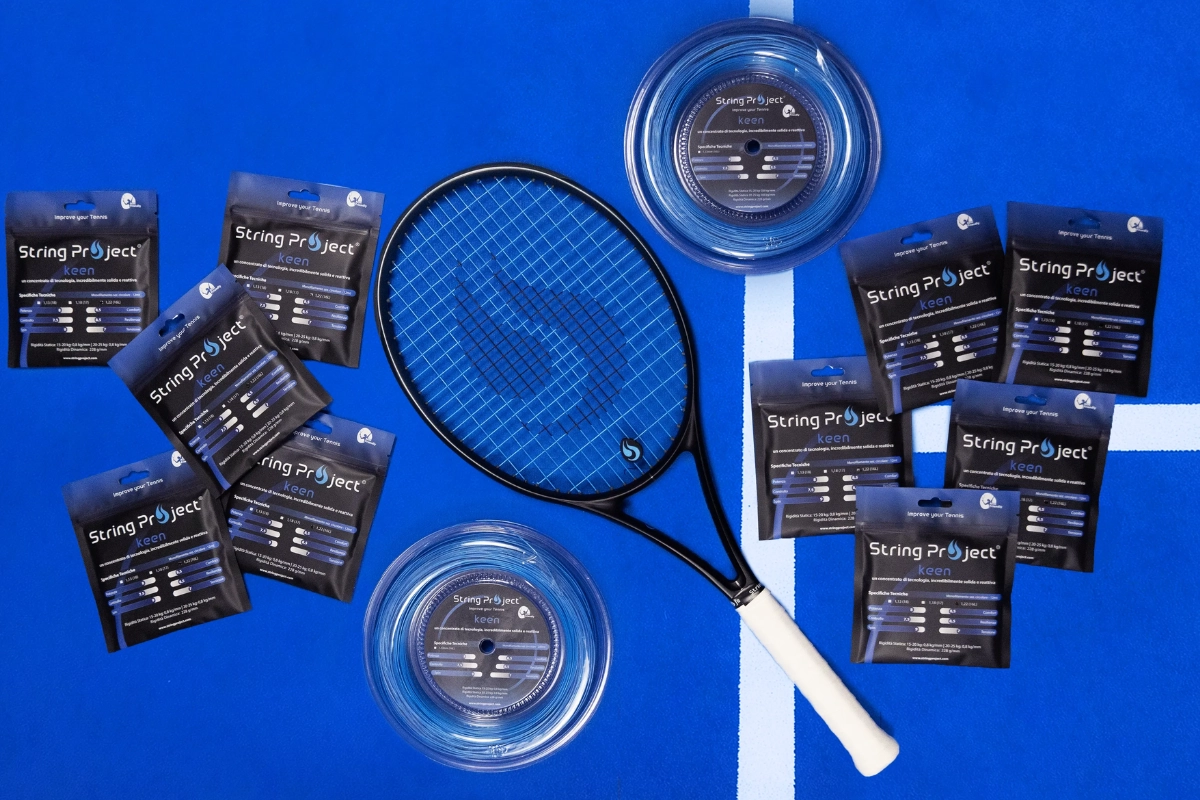
String Project Keen Blue – This string tends to play in phases:
Fresh (0–4 hrs): best control + best bite. The stringbed feels crisp, predictable and “locked in” on full swings.
Mid (4–10 hrs): still very playable, but launch angle starts to rise slightly and you lose a bit of that sharp, connected feel.
Late stage: tension drop becomes obvious — depth control fades, the response feels looser, and shots can start sailing unless you add more spin/shape.
👉 If you love the Keen Blue feel, don’t run it into the ground — restring once you feel the launch angle climb and the stringbed lose structure. See my guide here on choosing the right tennis string tension here.
Who it suits
Best For:
- Aggressive baseliners who want maximum spin + lively rebound
- Players who love a fresh, responsive stringbed
- Modern topspin forehands, heavy cross-courts, kicking serves
Not For:
- Players who want elite tension stability and “same at hour 12” consistency
- Flat hitters who rely on pure directional precision over shape
- Anyone who hates restringing frequently
Best suited racquets
String Project Keen Blue – works best in modern, spin-friendly or powerful frames where the extra bite and elastic feel can create heavy ball without turning the launch uncontrollable:
- Babolat Pure Aero / Aero 98 — adds even more RPM and kick; best if you like heavy shape and aggression.
- Yonex VCORE 98 / 100 — great blend of spin + pocketing; helps create a nastier dip and jump.
- Head Extreme MP / Extreme Tour — leans into the Extreme’s identity (height + rotation) with an energetic response.
- Wilson Shift 99 / Ultra 100 — gives easier access to shape and depth; strong for baseline pressure.
In dense 18×20 control frames, it can feel a little “too elastic” early and “too loose” later. If you do run it there, go slightly higher tension or consider a stabilising cross in hybrid.
Comparable strings
If you are considering String Project Keen Blue, you might also want to look at:
Comparable Strings — “Overall Fit” Snapshot
Indicative scores (not lab data) — a quick visual to show where String Project Keen Blue sits vs common alternatives.
Practible recommendations
Tension: 21–23 kg (46–51 lbs) is a strong starting range for most intermediate/advanced players. If you want more control, go +1 kg. If you want more comfort and pocketing, drop 1 kg.
Gauge: 1.25 mm is the safest all-round pick. Go thinner for more bite, thicker for more control/durability.
Setup: Best as a full bed if you’re chasing max spin. If you want it to stay “together” longer, consider a hybrid with a firmer, more stable cross (you’ll lose a touch of raw RPM, but gain predictability).
Restringing: Because tension holding is a weak point here, treat it as a fresh-performance poly. If you feel the launch rise or control drift, cut it out early—don’t ride it into the “loose and wild” zone.
If you enjoy these string reviews and find them useful, consider buying me a coffee. It helps fund future testing and gives me the time to bring you more honest, in-depth reviews

