
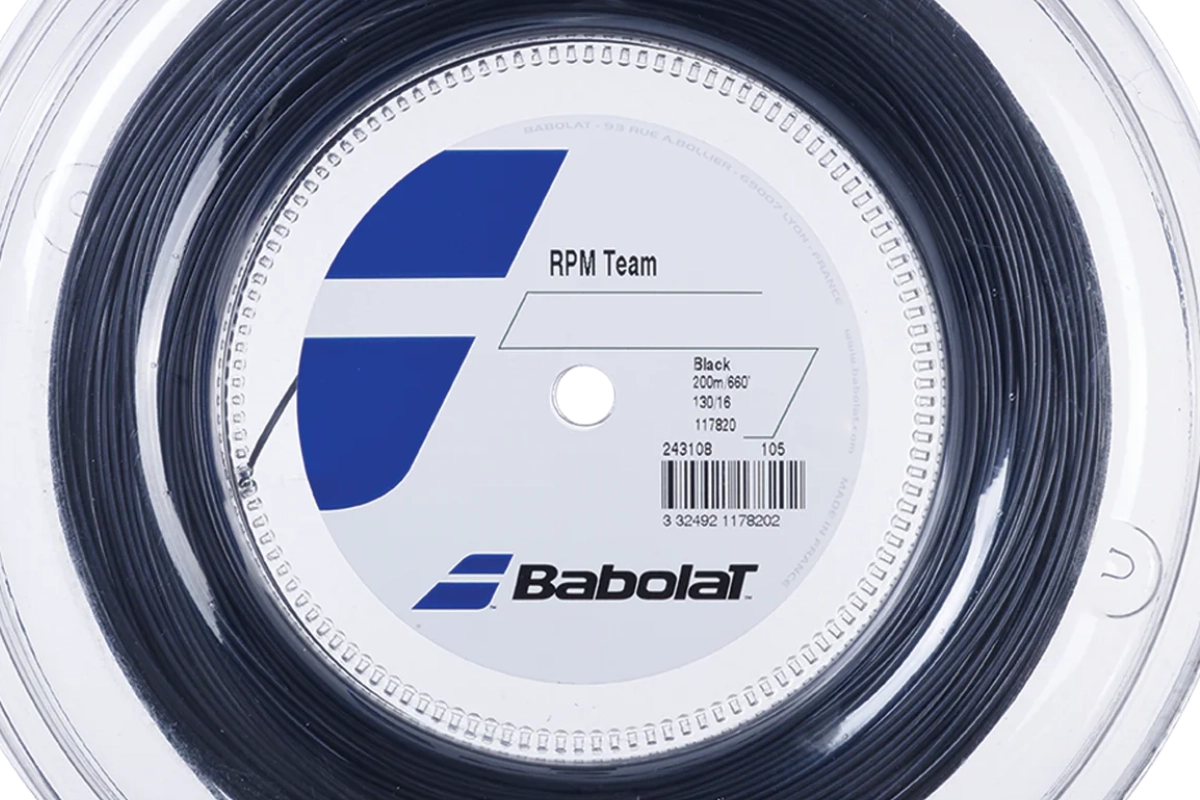
Babolat RPM Team Review – Babolat RPM Team is the more playable, slightly softer sibling of RPM Blast — built for players who want that classic RPM bite and shape, but without the harsh stiffness and “dead feel” that some players experience with Blast.
It sits in a sweet spot: high spin and control, solid power, and a more forgiving response than most aggressive polys. You still get the RPM DNA (snapback + bite), but RPM Team leans a little more toward comfort and elasticity than raw punishment.
Quick verdict
Babolat RPM Team Review – RPM Team is a spin-first, control-friendly poly that gives you a more comfortable, more elastic hit than RPM Blast — without losing the core Babolat “RPM identity.”
The launch is predictable, spin is excellent, and power is stronger than most control polys, meaning you can hit heavy without feeling like you’re swinging a dead board.
👉 Ideal if you want RPM spin with a friendlier feel, or if Blast feels too stiff/harsh.
What the numbers say
Below are the reference measurements for Babolat RPM team:
Babolat RPM Team — Indicative Performance Scores
👉 In short: RPM Team is built around elite spin + strong control, with good power, but it’s not a “set and forget” tension string. Expect to restring more often if you want peak performance.
How it plays (feel, spin, power, control)
Babolat RPM Team Review – On court, RPM Team feels softer and more forgiving than most polys, with a slightly muted but comfortable response. You still get that “poly control” vibe, but without the harsh, boardy shock that players often associate with RPM Blast or firmer co-polys.
Power sits in the medium range for a polyester — it’s not a free-launch rocket, but it definitely gives you more depth than typical control polys. If you’re coming from a dead-feeling string, RPM Team will feel easier to push the ball through the court.
Spin is strong and easy to access. The shaped profile helps the ball bite, and the softer feel lets you swing confidently without fearing the ball will take off. It’s not an extreme spin monster like Tour Bite / Hyper-G, but it’s a very solid “modern spin poly” level.
Control is good when the string is fresh — predictable enough for full swings and aggressive baseline play. The main trade-off is that as tension drops, the launch can get a bit more lively, so you may start to lose that locked-in precision compared with firmer, more stable polys.
Pros and Cons
Babolat RPM Team Review – Babolat RPM Team – Here’s a quick pros and cons snapshot for Babolat RPM Team:
Durability & tension maintenance
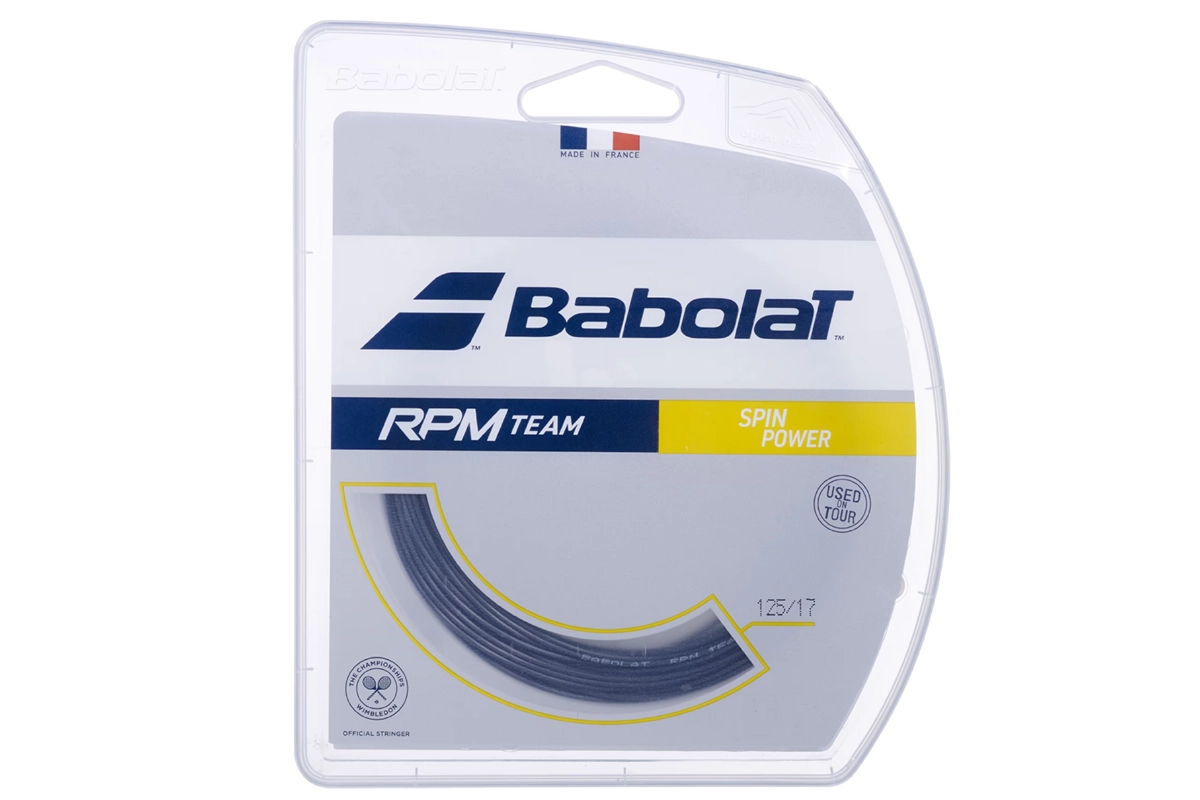
Babolat RPM Team Review – RPM Team’s durability is decent, but tension stability is only OK.
This string tends to play in phases:
- Fresh (0–4 hrs): best spin + best control
- Mid (4–10 hrs): still good but slightly higher launch / less bite
- Late stage: balls start flying more, response feels looser
👉 If you love the RPM Team feel, don’t wait until it goes dead — restring while it’s still lively. See my guide here on choosing the right tennis string tension.
Who it suits
Best For:
- Intermediate players wanting easy spin + control
- Baseliners who play with heavy topspin
- Players who like RPM Blast concept but want more comfort
- Those who want a spin poly that’s not brutally stiff
- Juniors / competitive club players who restring regularly
Not For:
- Players who want elite stability and locked-in feel
- People sensitive to tension drop
- Players who need maximum comfort (multi/syn gut better)
- Flat hitters who rely on ultra-low launch + stiffness
Best suited racquets
Comparable strings
Babolat RPM Team Review – If you like Babolat RPM Team, you might also consider:
- Babolat RPM Blast – firmer, deader, more stability, less comfort
- Solinco Hyper-G – softer feel + similar spin, slightly higher launch
- Toroline Wasabi / Caviar – better tension maintenance options
- Luxilon ALU Power – more explosive but shorter lifespan
- Kirschbaum Max Power – better tension stability, firmer response
Practible recommendations
Tension: 21–23 kg (46–51 lbs) is a sensible starting range for most intermediate to advanced players. If you want a firmer, more locked-in response (or you’re a fast swinger), stay toward 22–23 kg. If comfort is a priority — or you’re using a stiffer frame like a Pure Drive — dropping 1 kg makes RPM Team feel noticeably more forgiving without turning it into a trampoline.
Gauge: 1.25 mm is the sweet spot for RPM Team — best blend of bite, comfort and playability. If you’re a frequent string breaker or heavy hitter, go 1.30 mm for extra durability and a slightly firmer feel. If you want maximum feel and ball pocketing, 1.20 mm plays great but won’t last as long.
Setup: RPM Team is best as a full bed if you want comfort and consistency in a softer poly. If you want a little extra touch or depth, it also works really well in a hybrid — RPM Team in the mains with a multifilament cross (or natural gut if you want premium feel). If you struggle with control at higher power levels, keep it as a full bed and don’t drop tension too far.
Restringing: RPM Team is more playable than RPM Blast over time, but it still follows the same poly rule: restring when it goes dead, not when it breaks. For most players, 10–14 hours of solid hitting is a good window. If you feel the stringbed getting noticeably “muted”, launches higher, or you lose snap-back, that’s your sign it’s time — even if the strings look fine.
If you enjoy these string reviews and find them useful, consider buying me a coffee. It helps fund future testing and gives me the time to bring you more honest, in-depth reviews.

